Silkroad Museum
Uzbekistan
Uzbek Government
WILMOTTE & ASSOCIÉS ARCHITECTES
16,740 sqm
Creation of a SilkRoad Museum
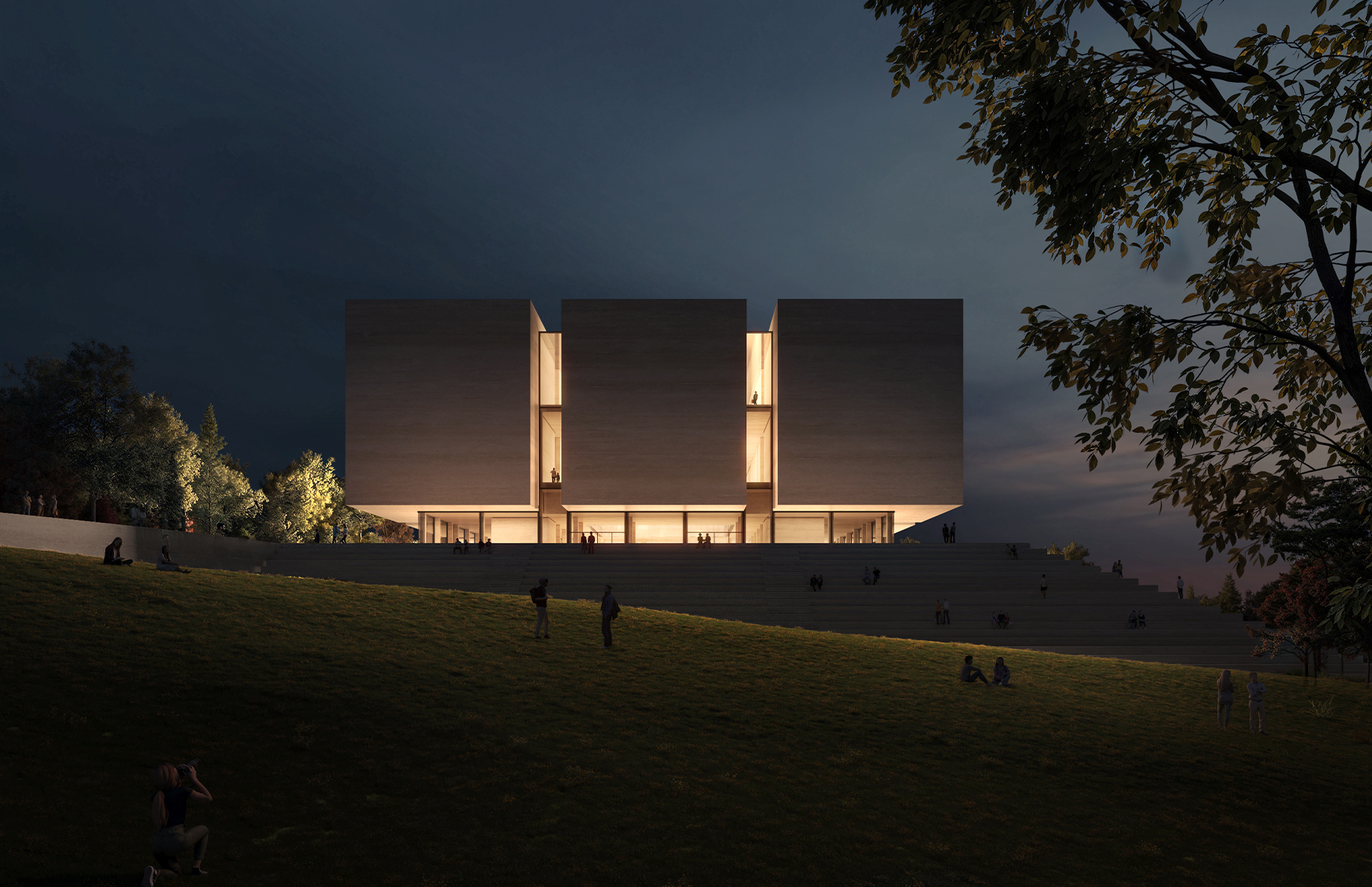

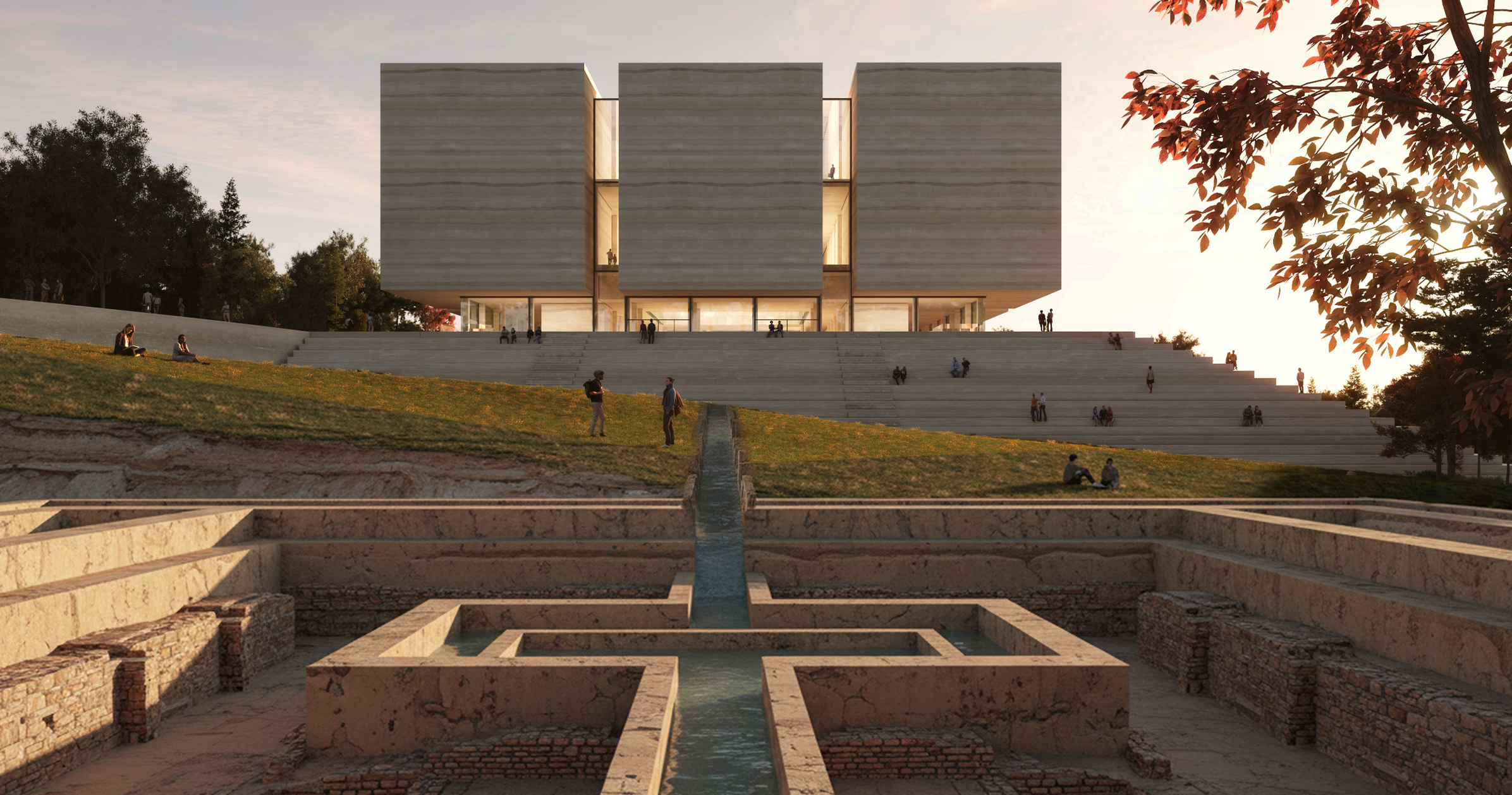
Located in Samarkand, the Silk Road Museum is conceived as a comprehensive project in which architecture, exhibition, and landscape form a single, unified narrative. Inspired by the geometric clarity and mathematical rigor of Timurid architecture, it offers a contemporary reading of the Silk Road, envisioned from its center in Samarkand rather than from external viewpoints oriented toward East or West.
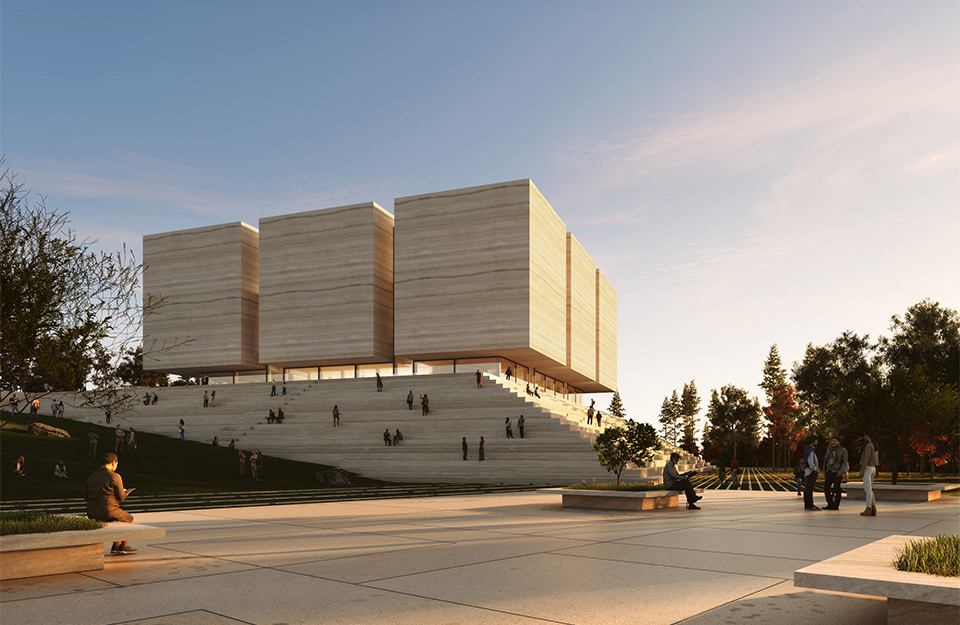
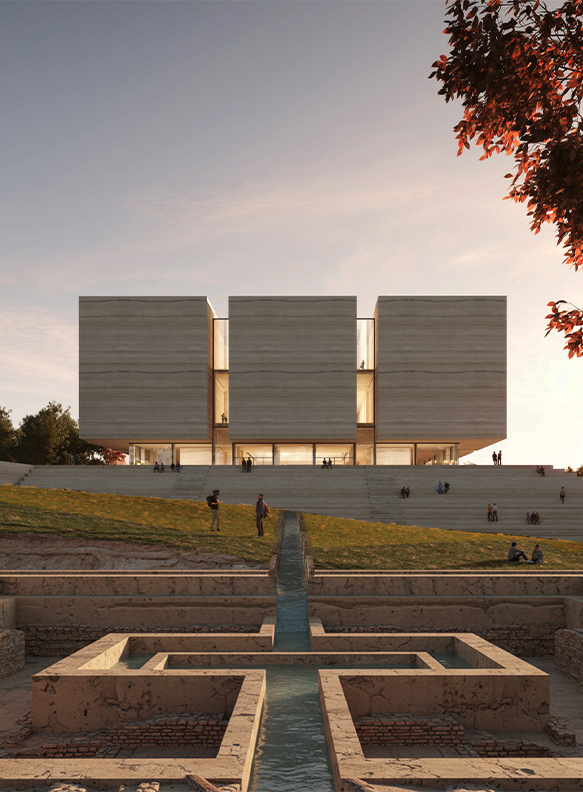
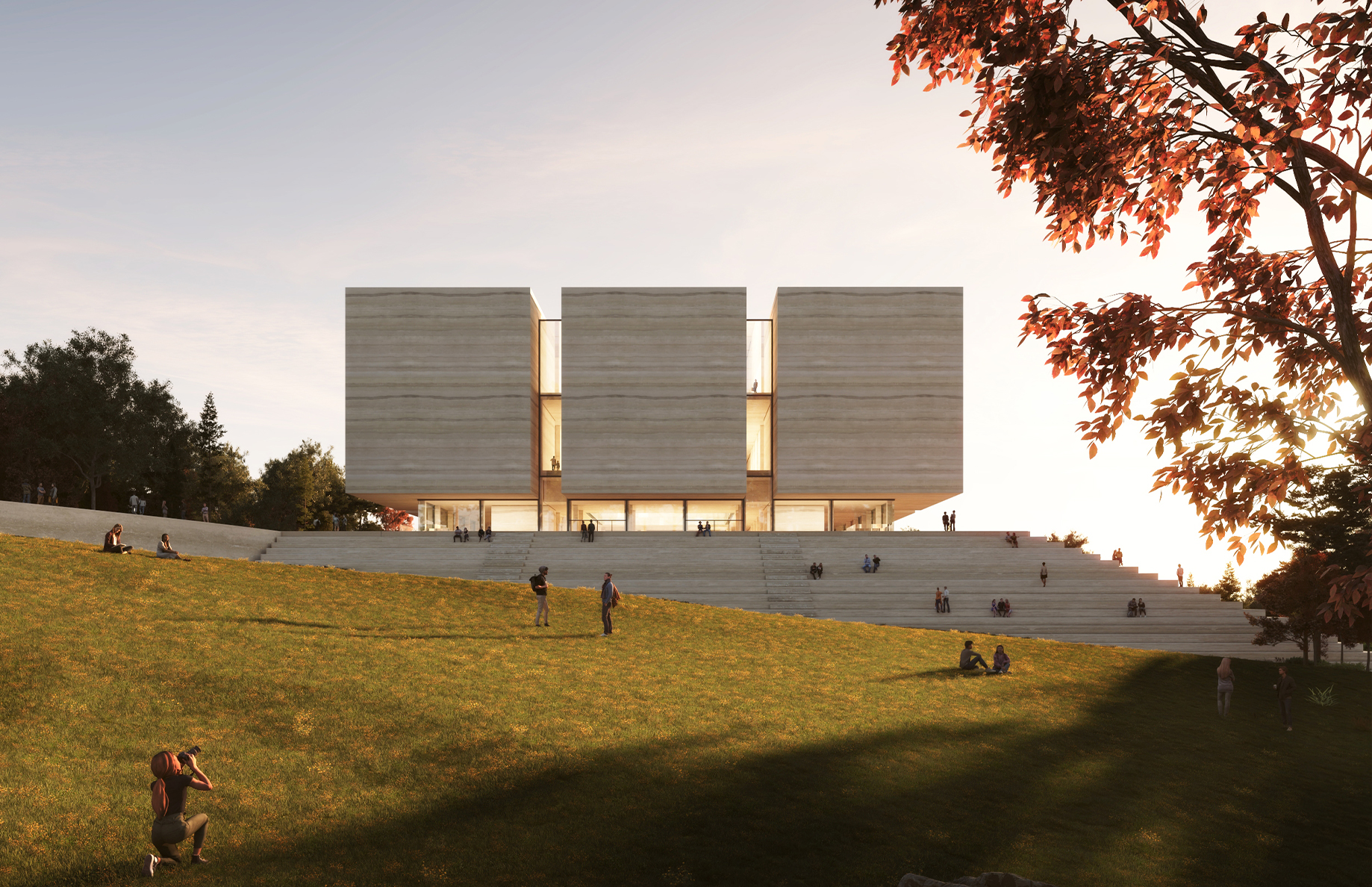
Set at the heart of the historic Timurid urban fabric, slightly elevated, the museum opens onto the city and the foundational sites of its history, asserting itself as a new point of cultural convergence.
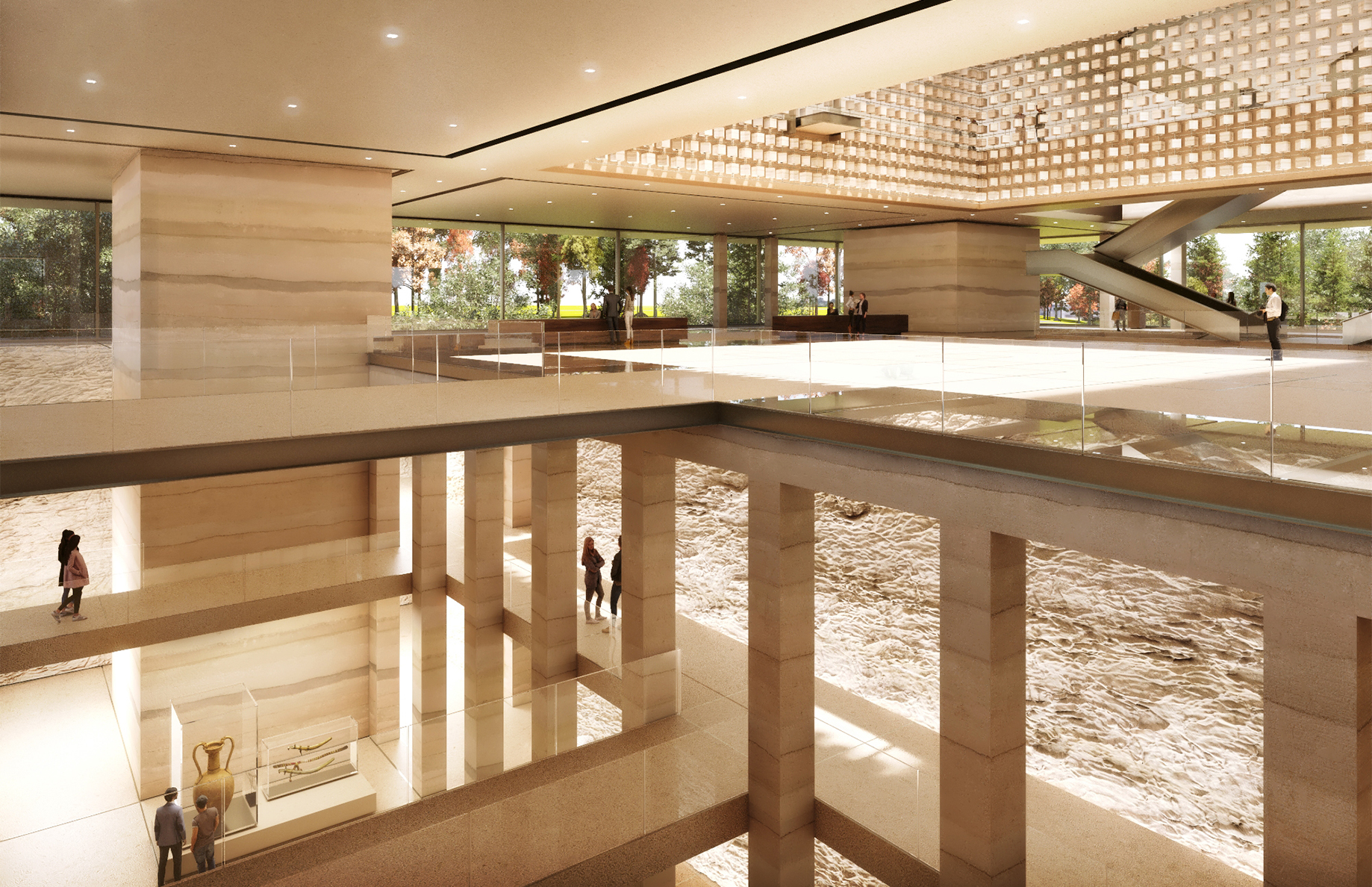
The architecture is grounded in an archaeological plinth made of local earth, revealing the strata of time. Embraced as the foundation of the project, earth becomes at once a construction material, a repository of memory, and the support of the narrative.
Above it, the ground floor—open and transparent—establishes a threshold between park, archaeology, and museum.
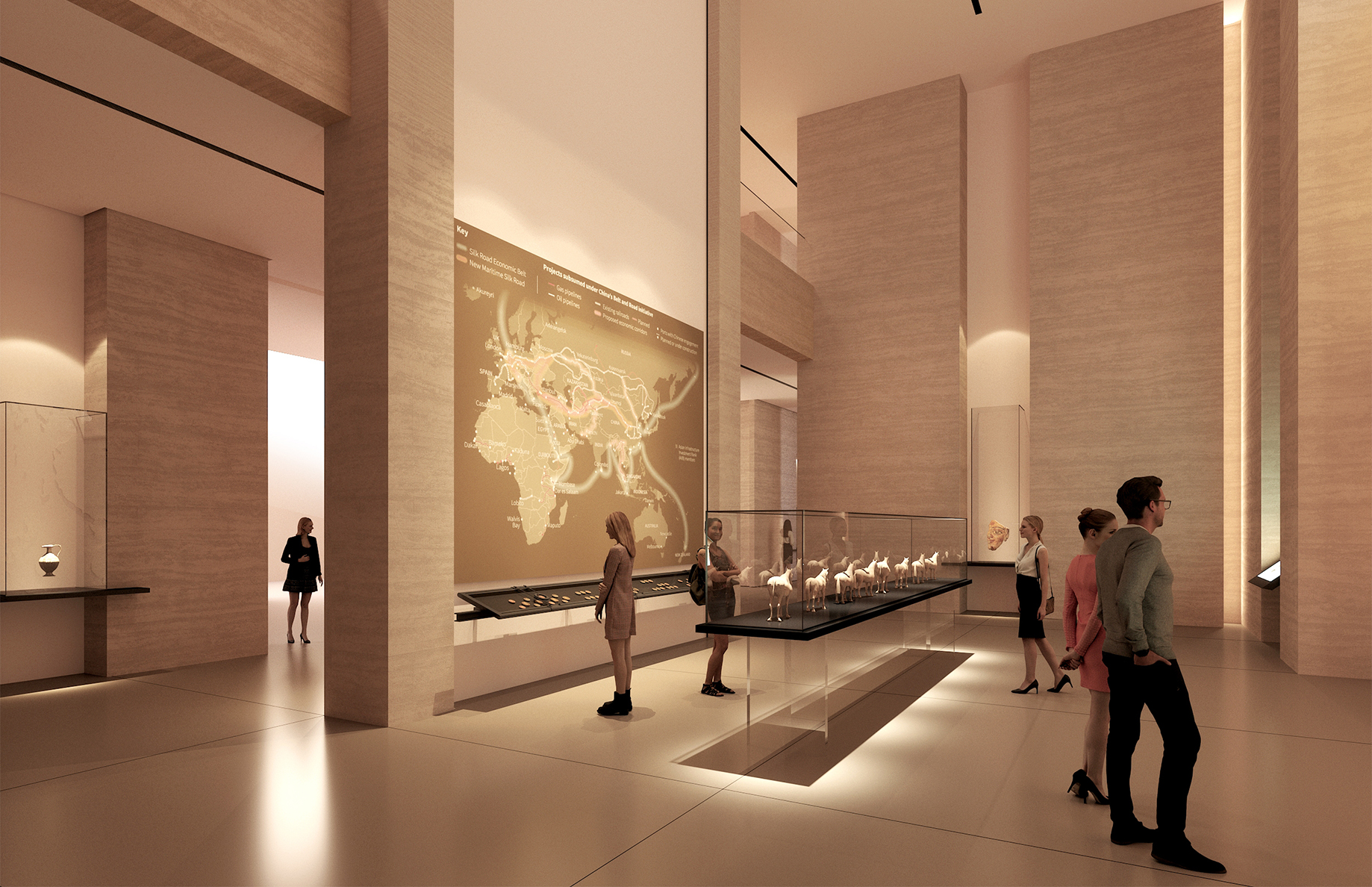
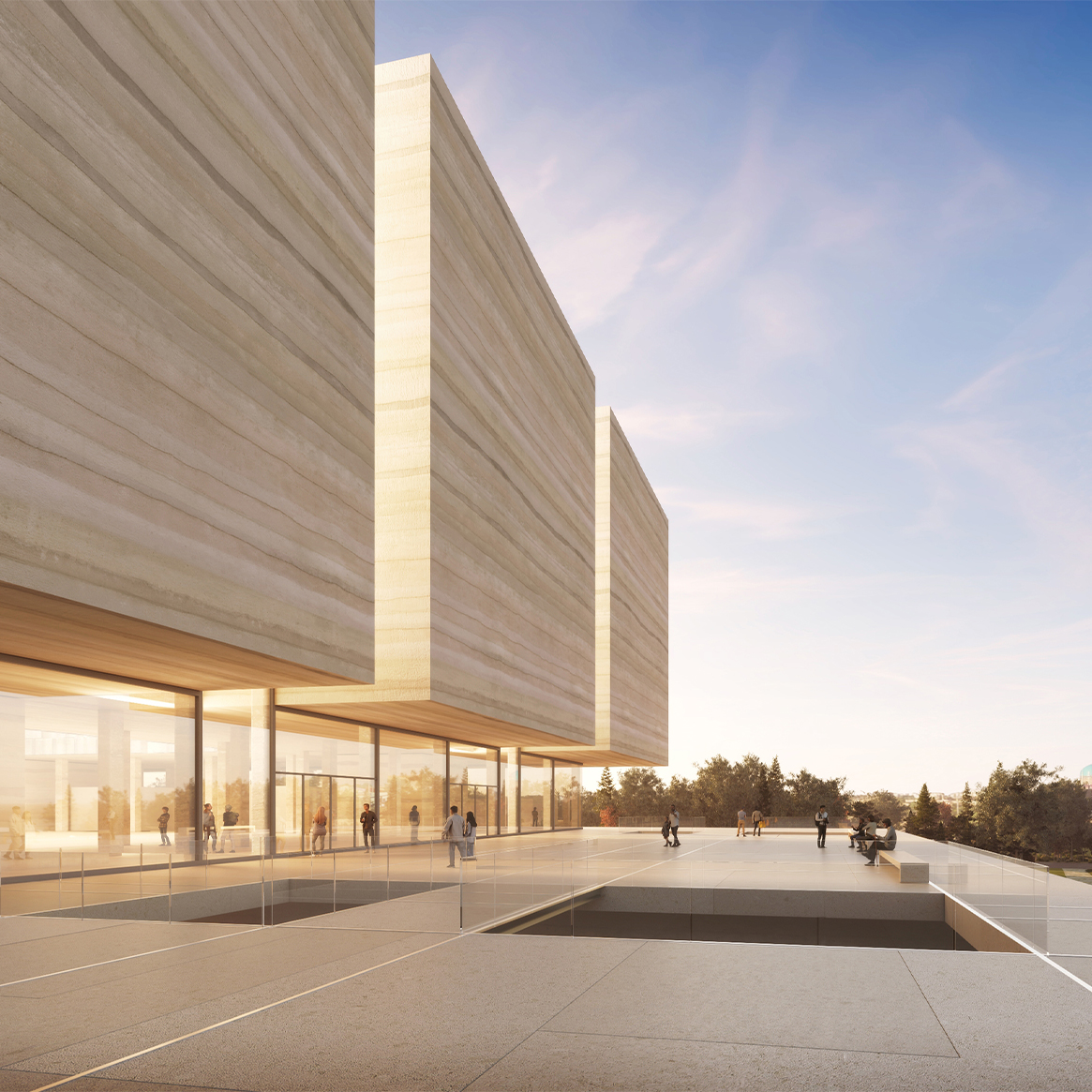
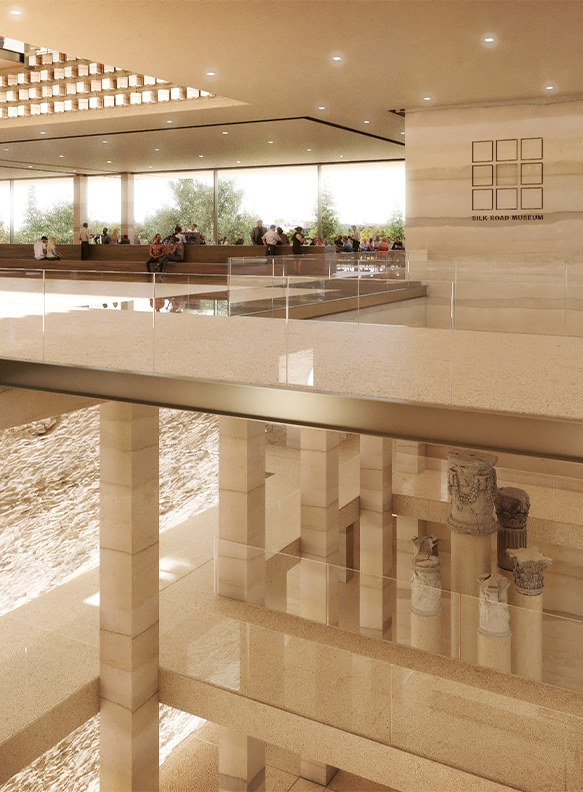
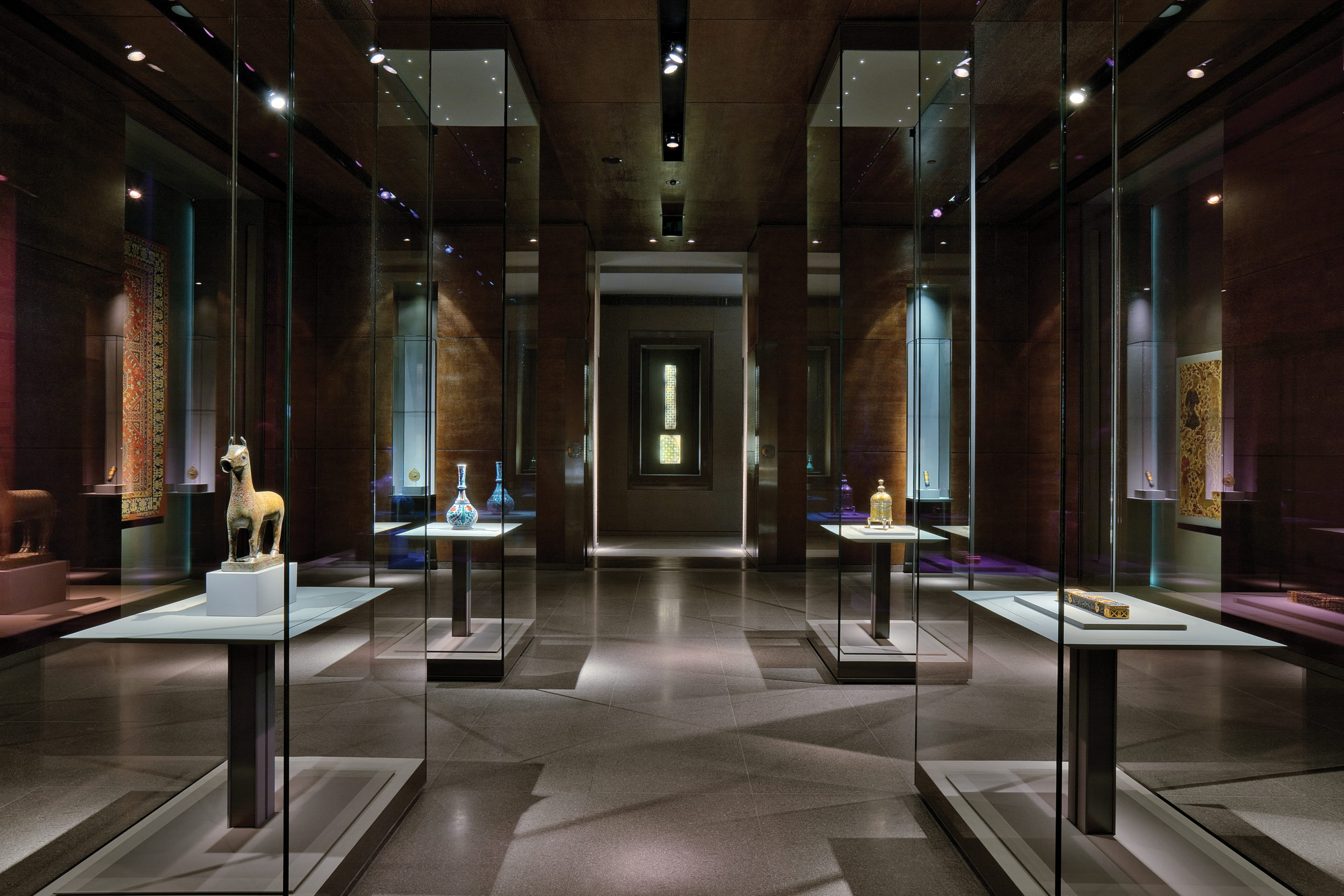
The exhibition spaces are organized into quadratic volumes around a central atrium, following the introverted principle of madrassas. Behind a clear and legible external geometry lies a rich spatial diversity within: tall or low, long or wide, circular or rectangular galleries, offering varied atmospheres depending on the content.
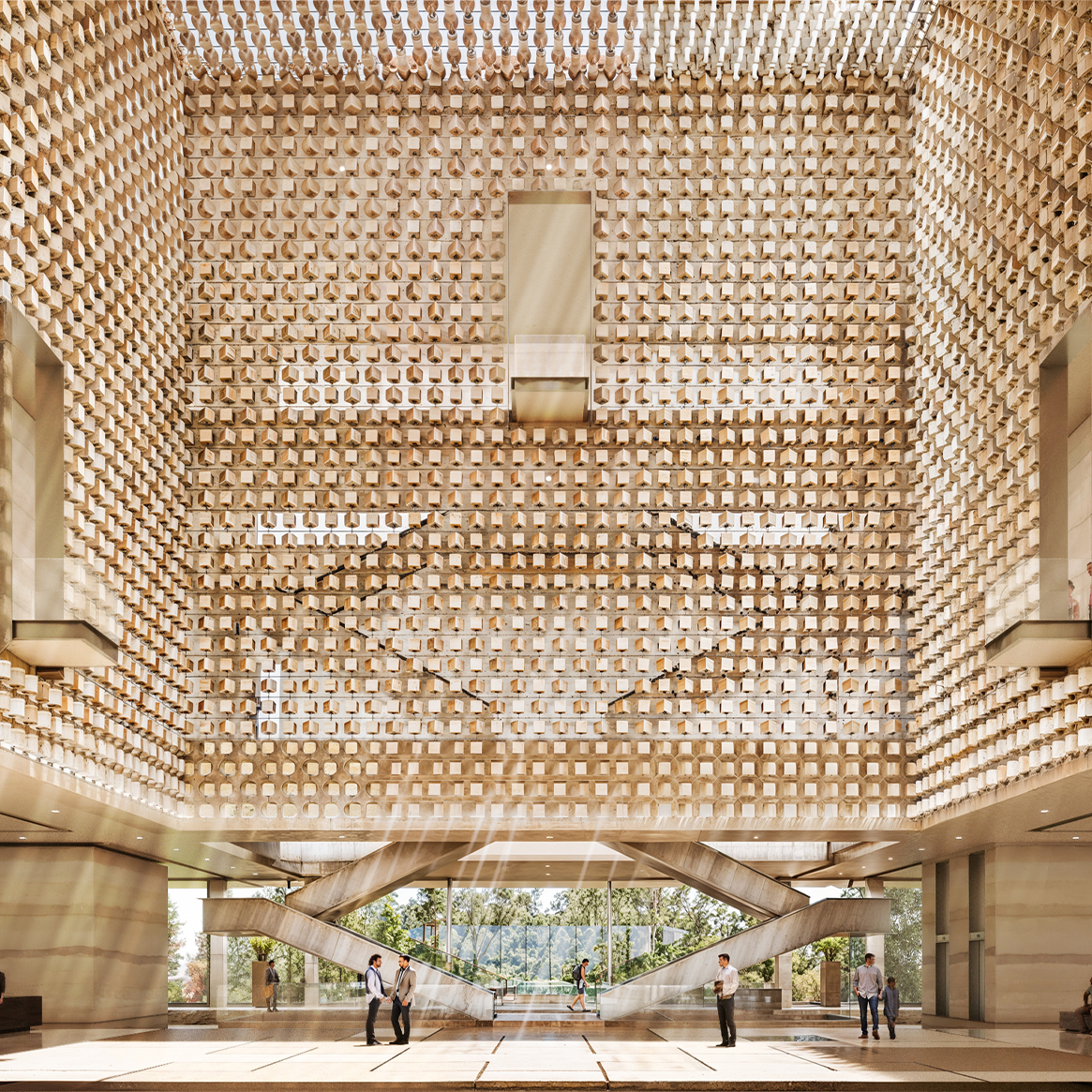
At the heart of the museum, the atrium visually connects the different layers and makes light a material in its own right, carrying meaning and guiding orientation.
The park extends the experience by blending land art with archaeological areas, blurring the boundaries between historical remains and contemporary interventions.
Like the Silk Road itself, the museum does not tell a linear story, but rather a network of relationships, knowledge, and cultures—where places, people, and ideas meet, transform, and are transmitted.