Palomaya
Montpellier, France
Crédit Agricole Immobilier
Pitch Promotion
Architect: WILMOTTE & ASSOCIÉS ARCHITECTES
Associate Architect: Jean-Baptiste Miralles
Building Engineering (Thermal/Mechanical/Structural): BG Ingénieurs Conseils
Environmental Project Management Assistance: Greenaffair
Landscape Architect: Neveux-Rouyer
19,300 sqm including:
Residential: 12,000 sqm
Offices: 4,000 sqm
Retail: 3,300 sqm
2020
Construction of a mixed-use real estate development including housing, offices, and retail spaces, comprising 6 buildings
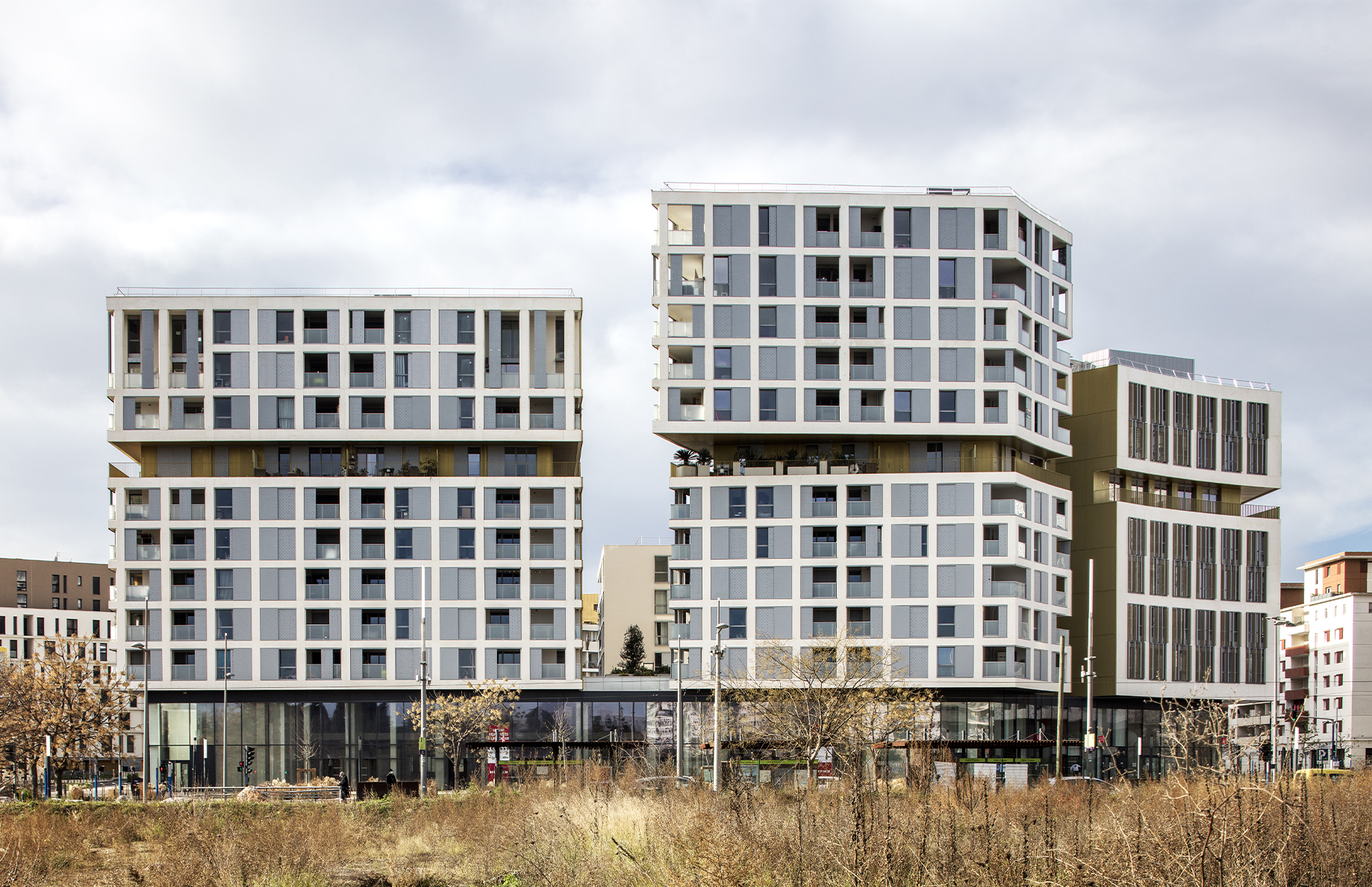
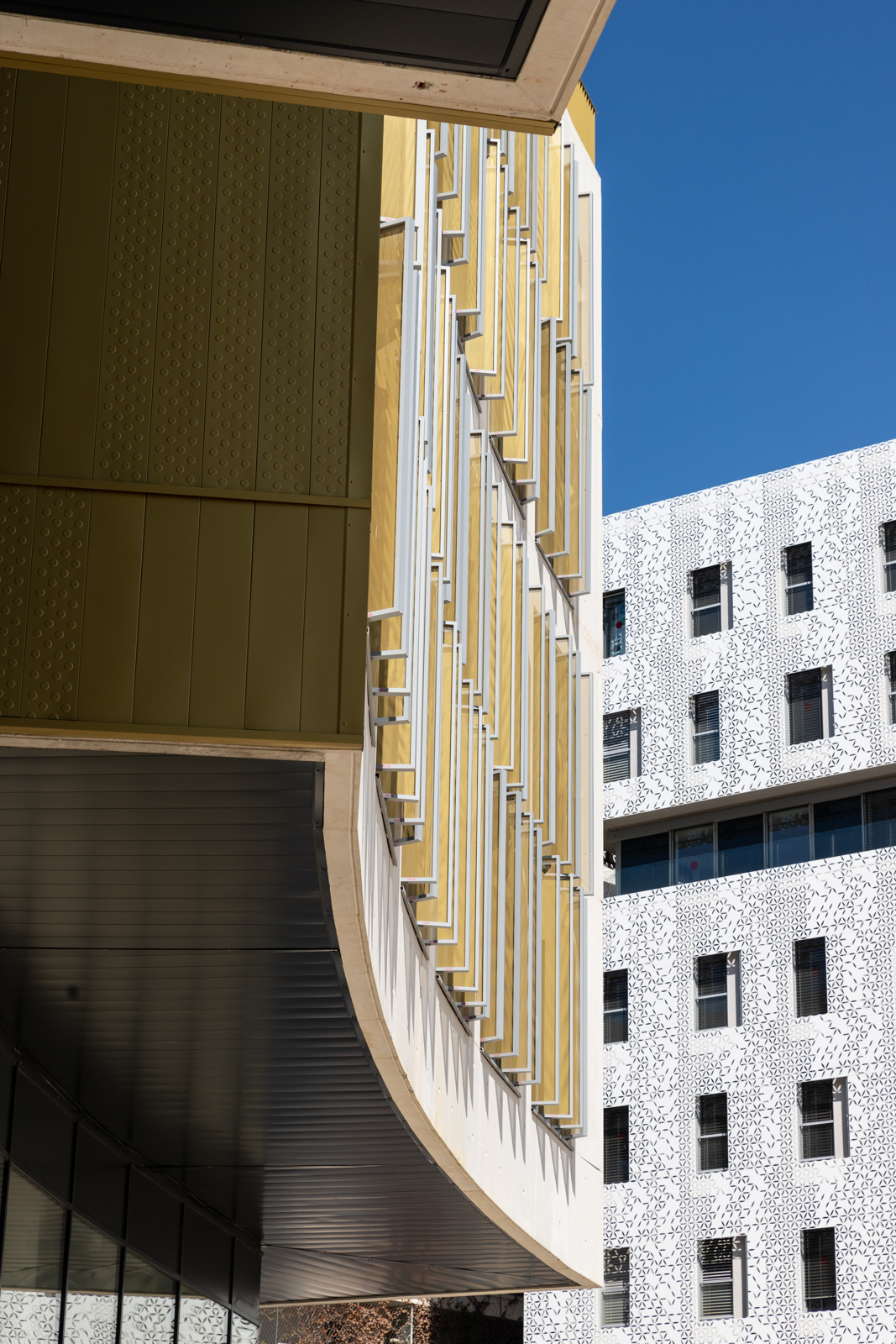
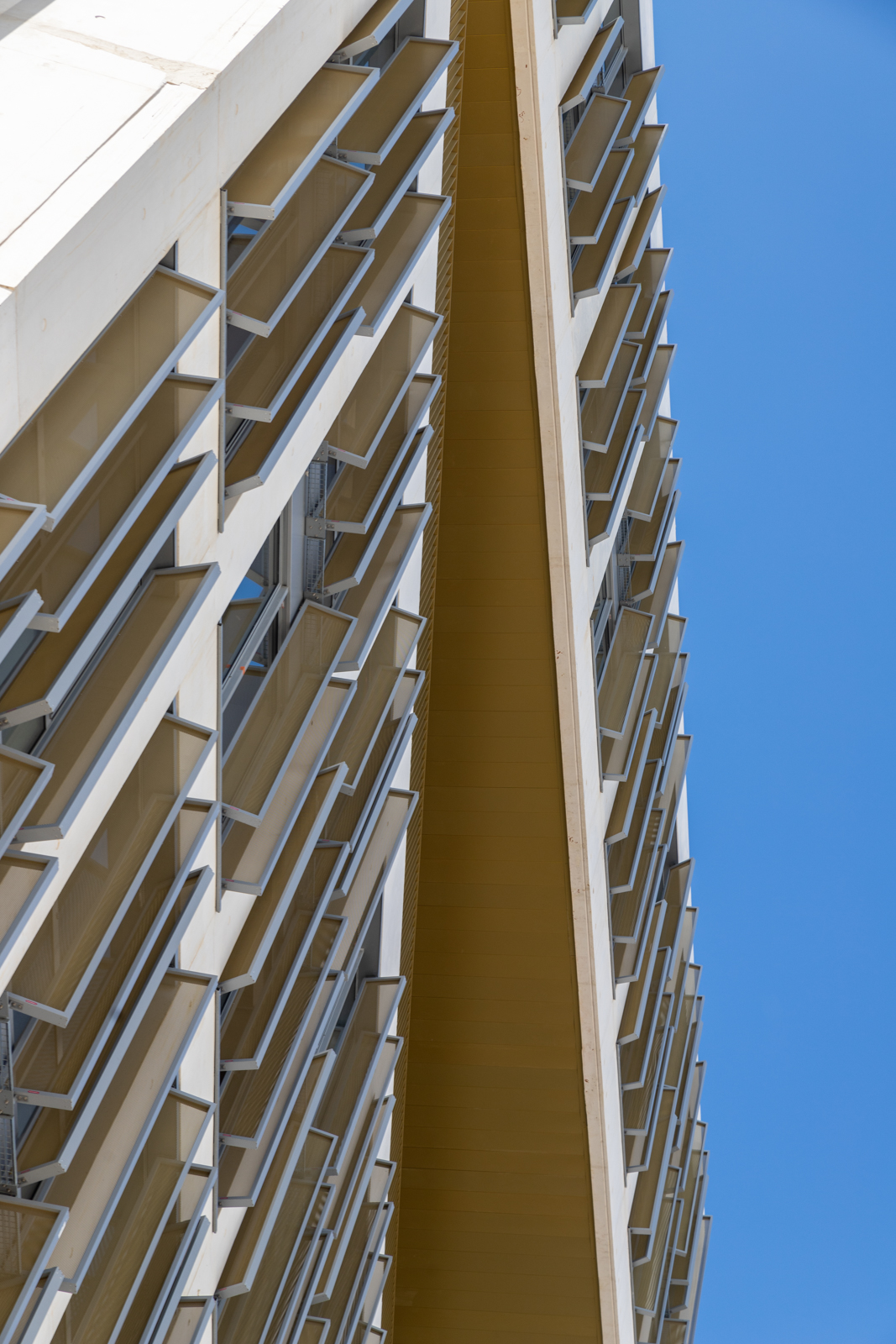
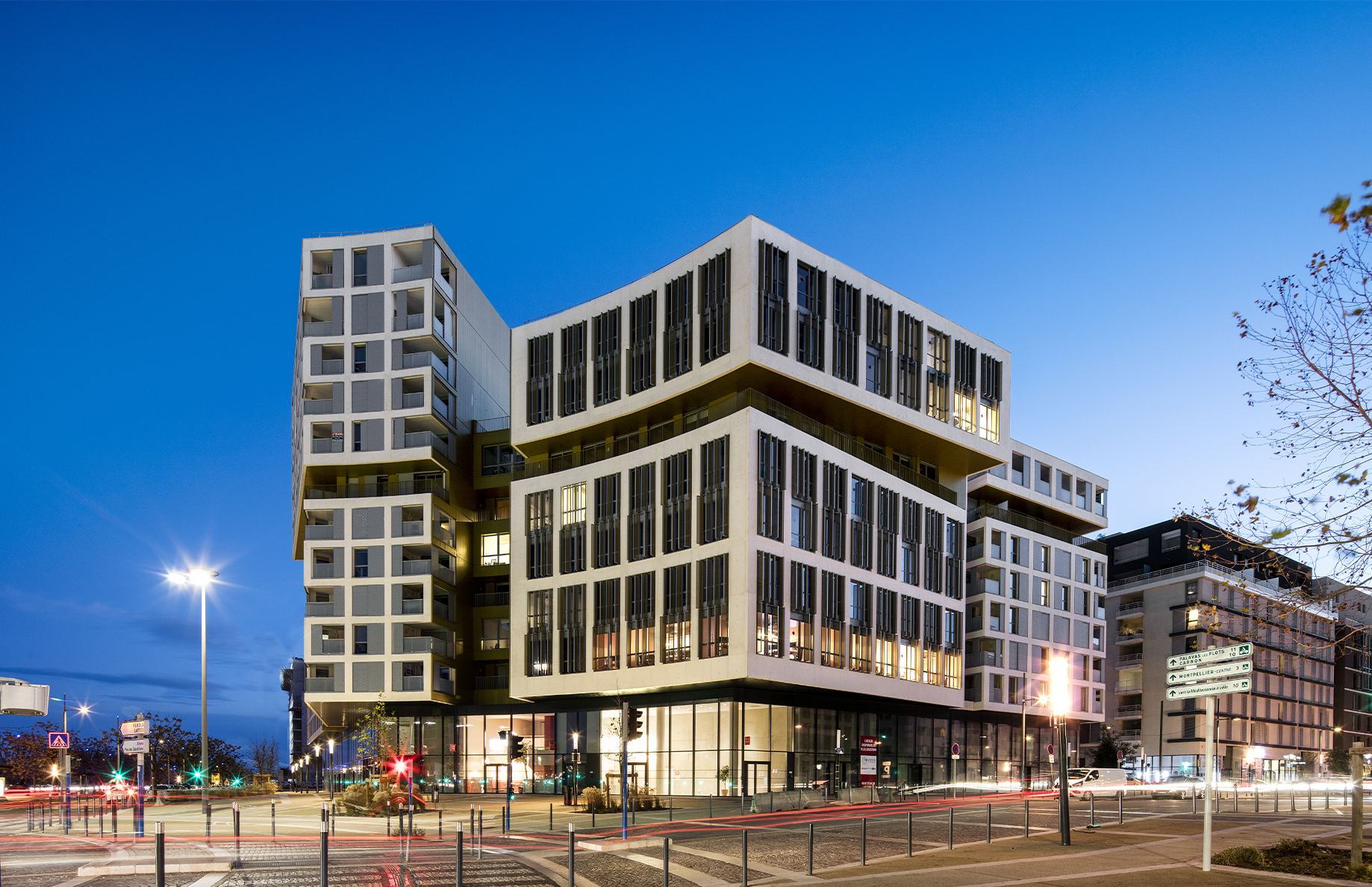
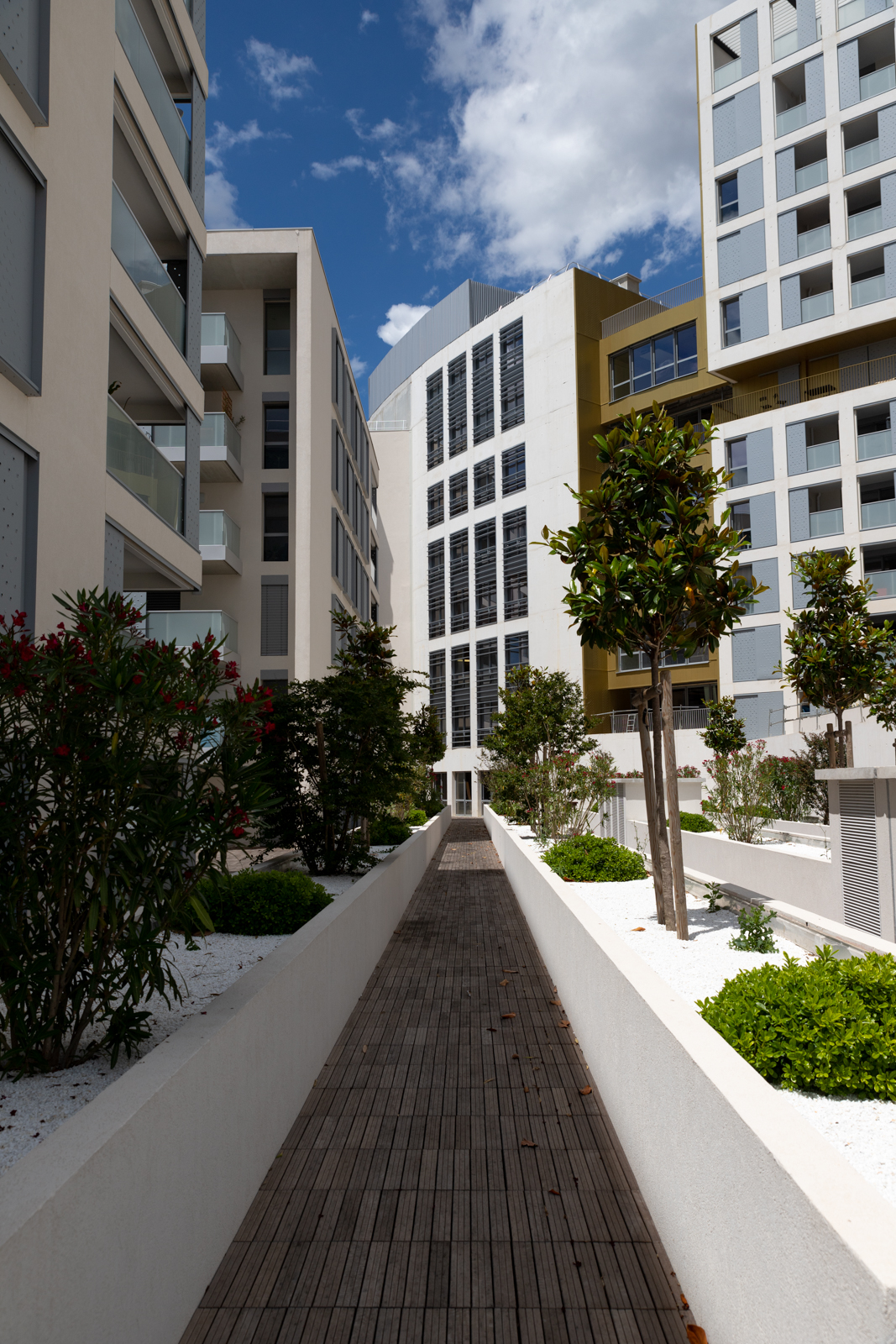
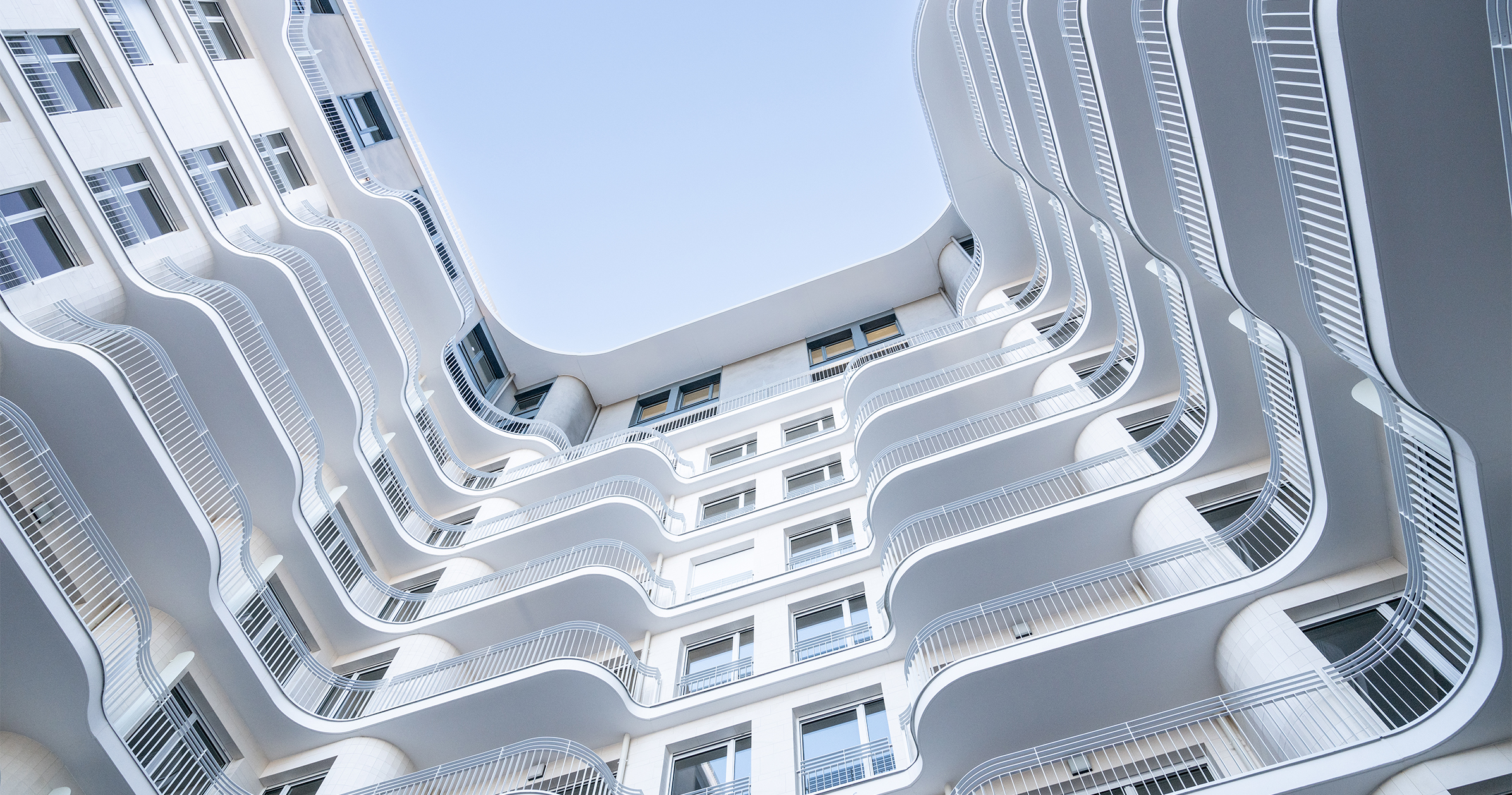
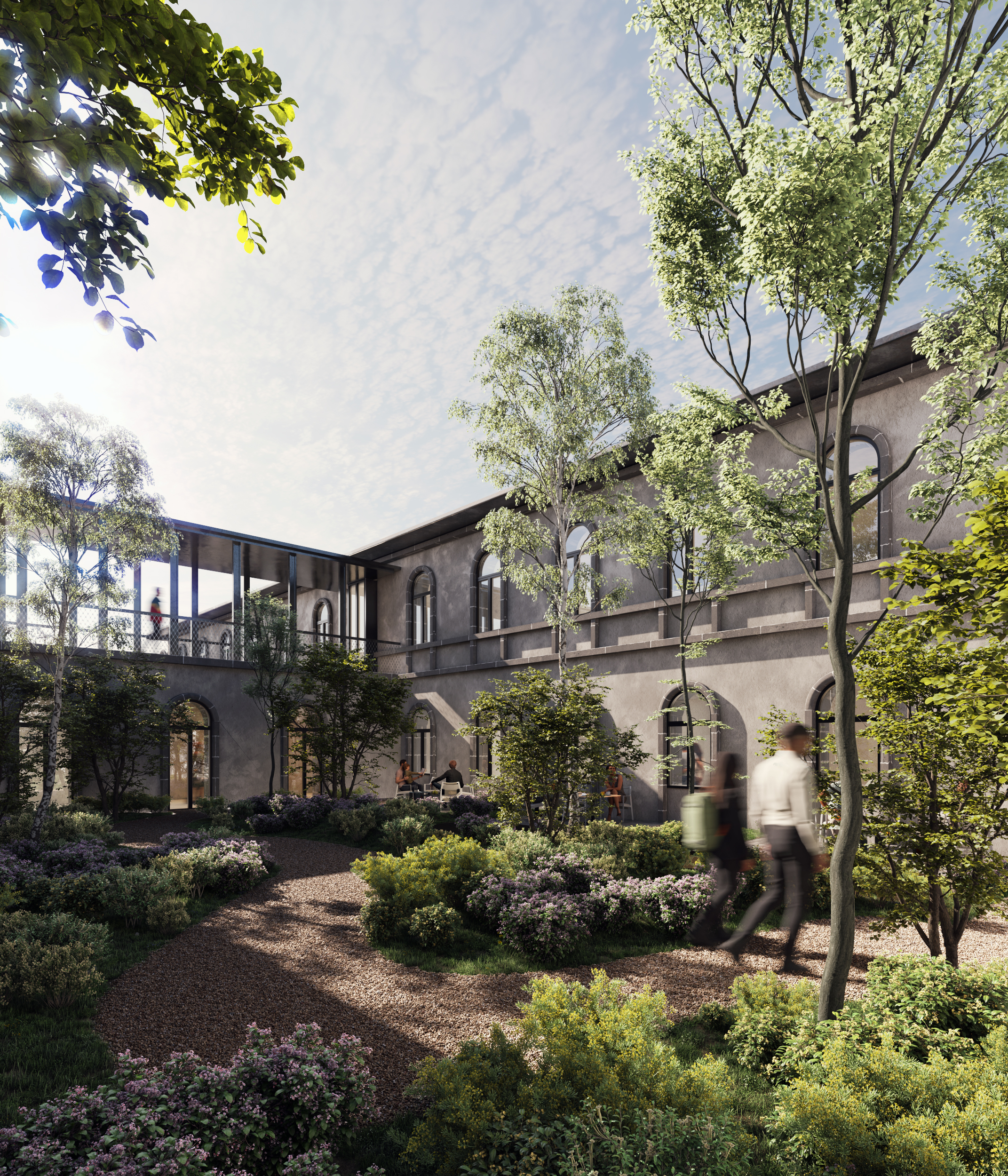
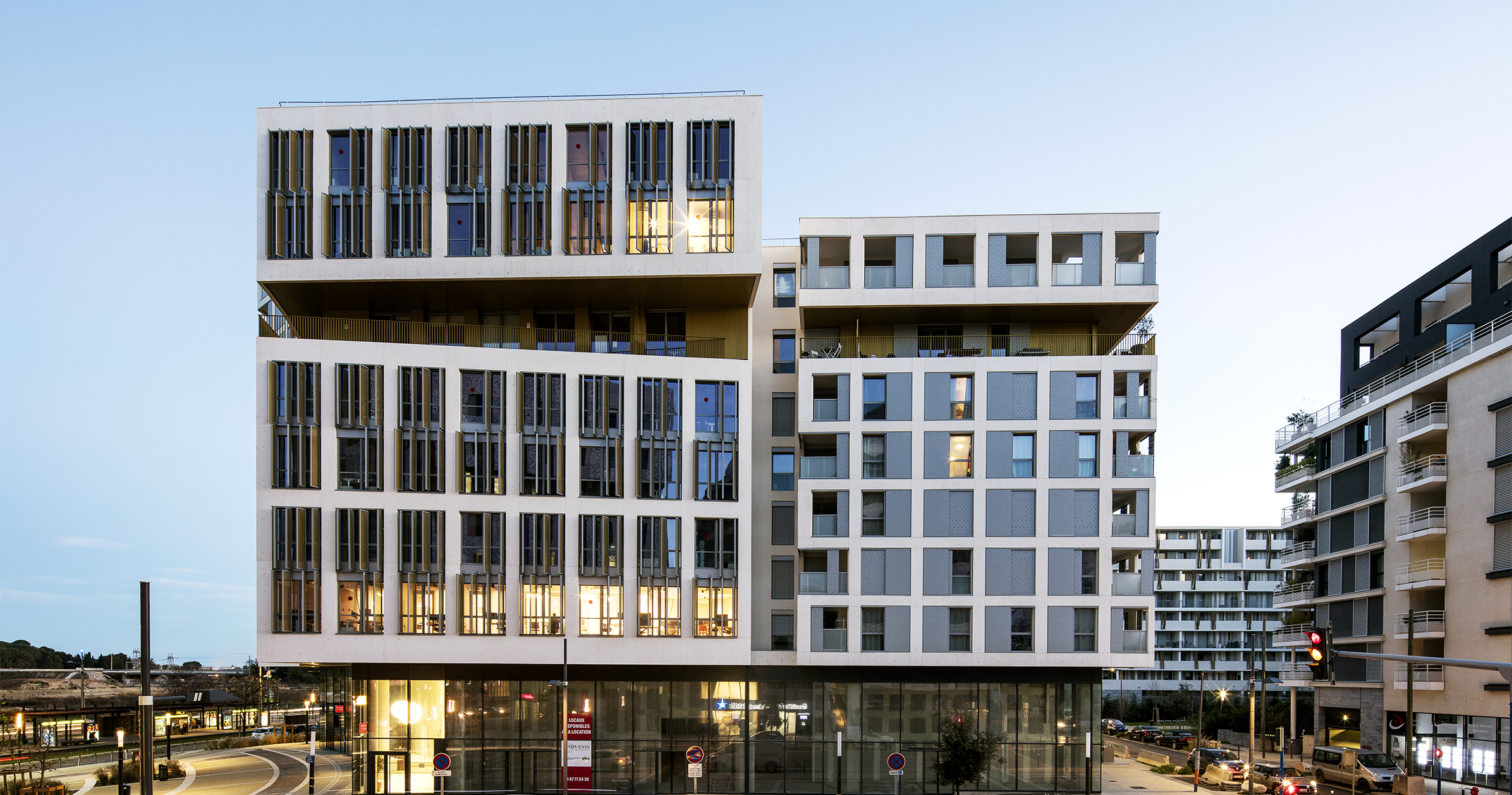
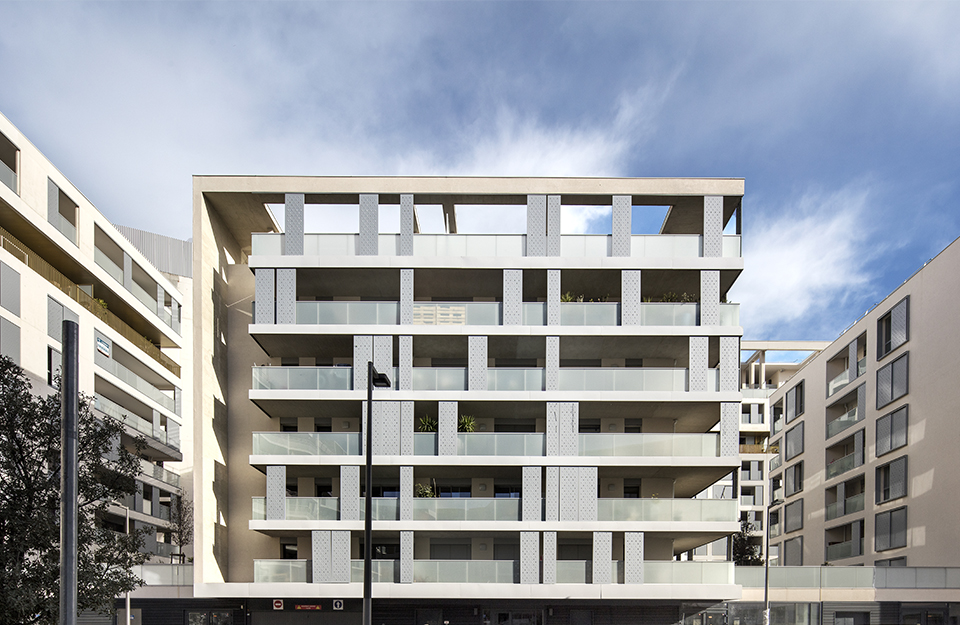
Palomaya is a mixed-use development combining residential, office, and retail spaces, designed with a bioclimatic approach. Arranged around a large central garden, the six buildings benefit from a layout, orientation, and architecture conceived to provide an ideal and sustainable living environment for their occupants.
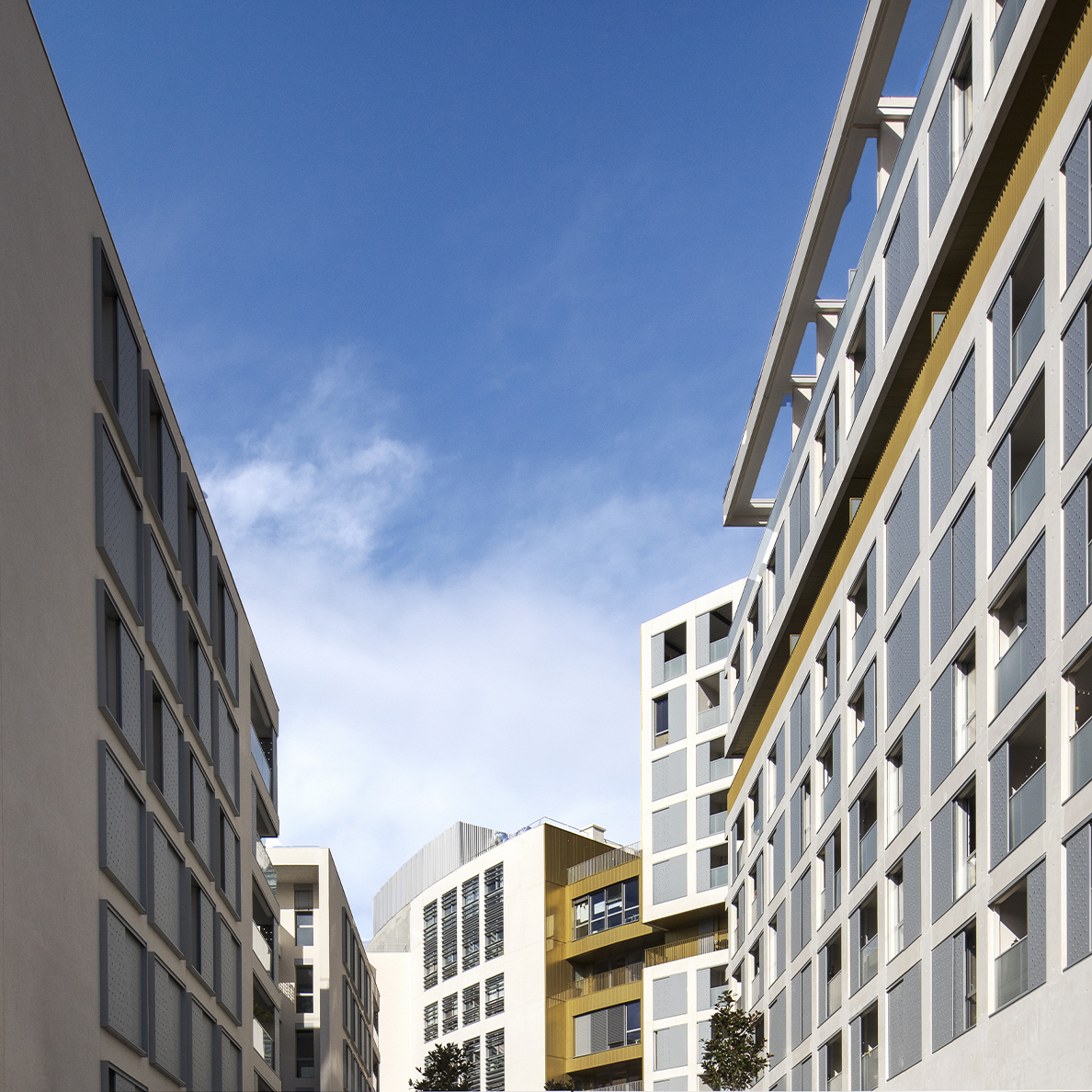
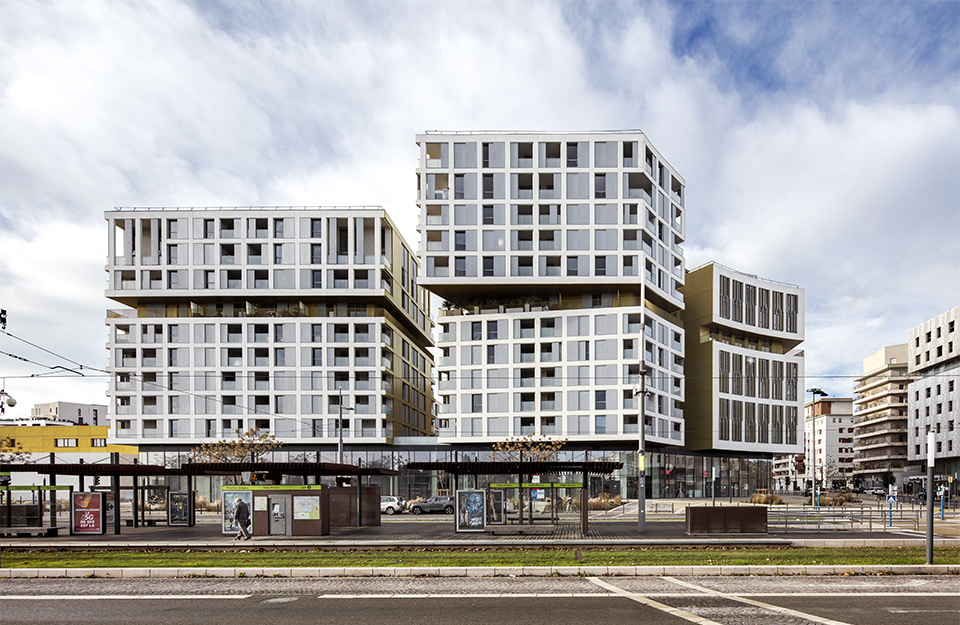
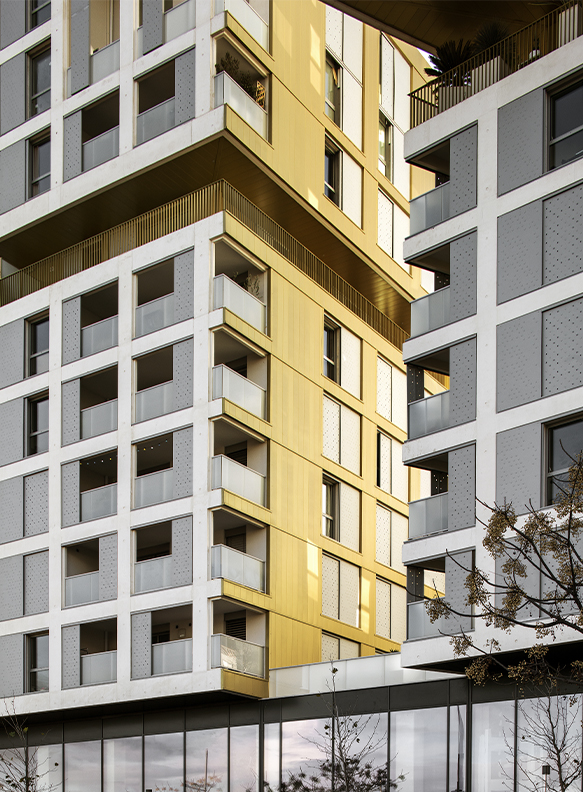
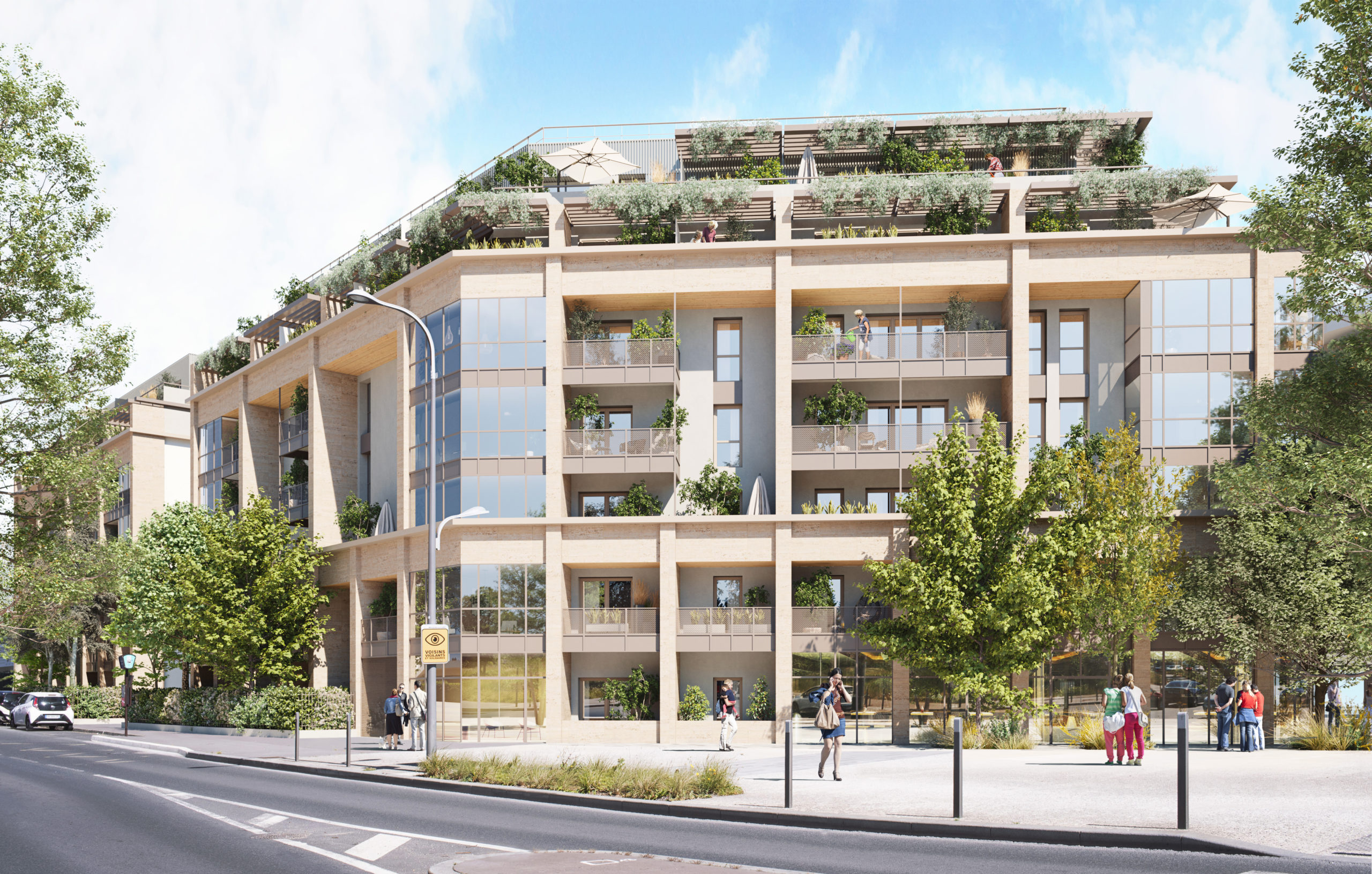
The project is based on an element derived from the initial massing, which has become its unifying principle: a horizontal split runs through all the buildings, linking the volumes and creating a strong architectural statement.
In contrast with the vertical treatment of the façades, this line fragments the mass and structures the project. The balance emerges from the interplay between horizontality, verticality, and transparency generated by these divisions.
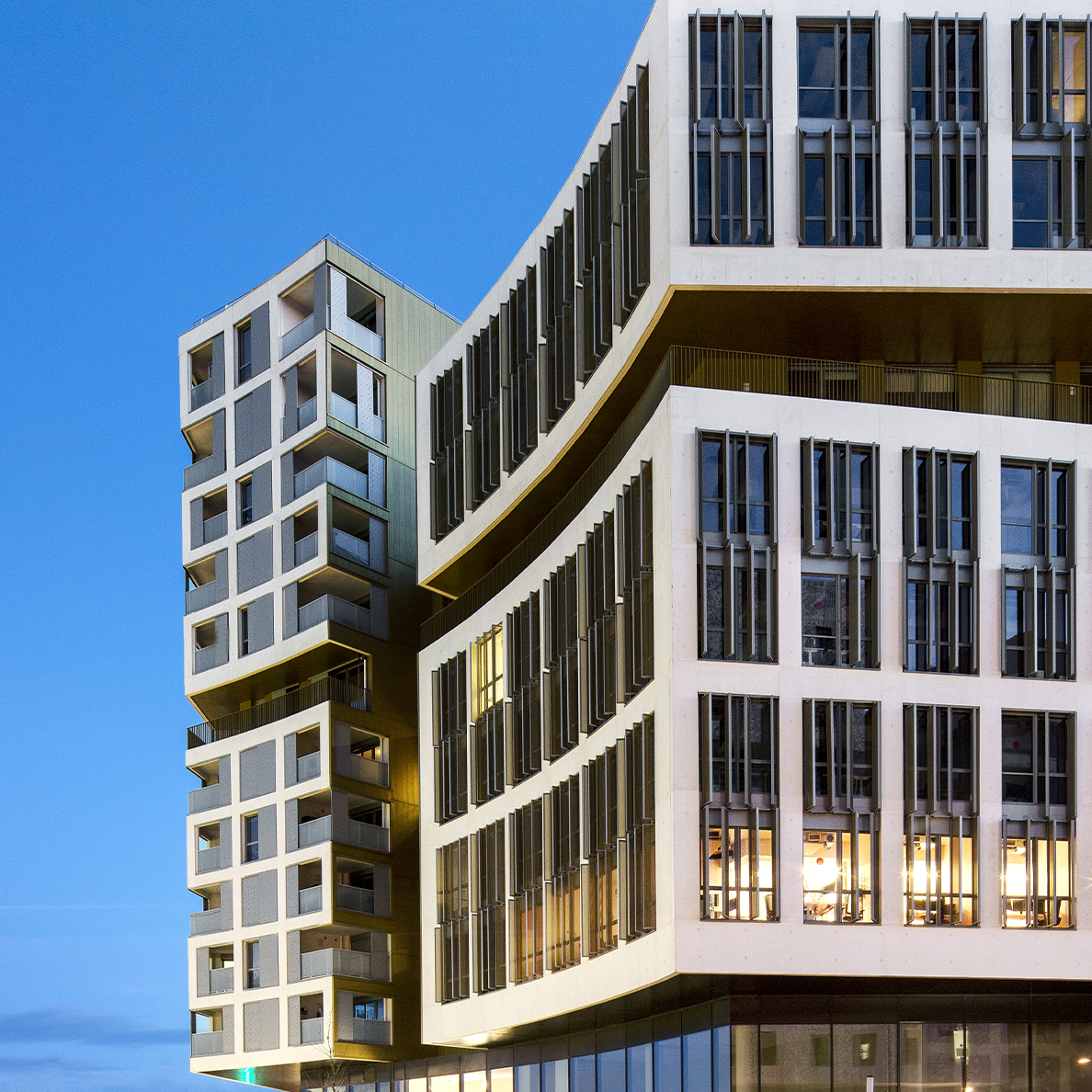
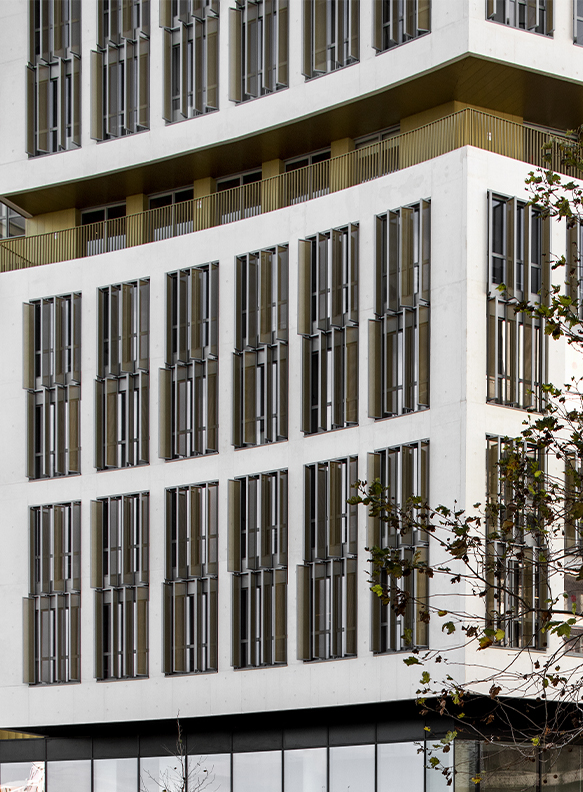
The result is the differentiation of four components within the unified volume:
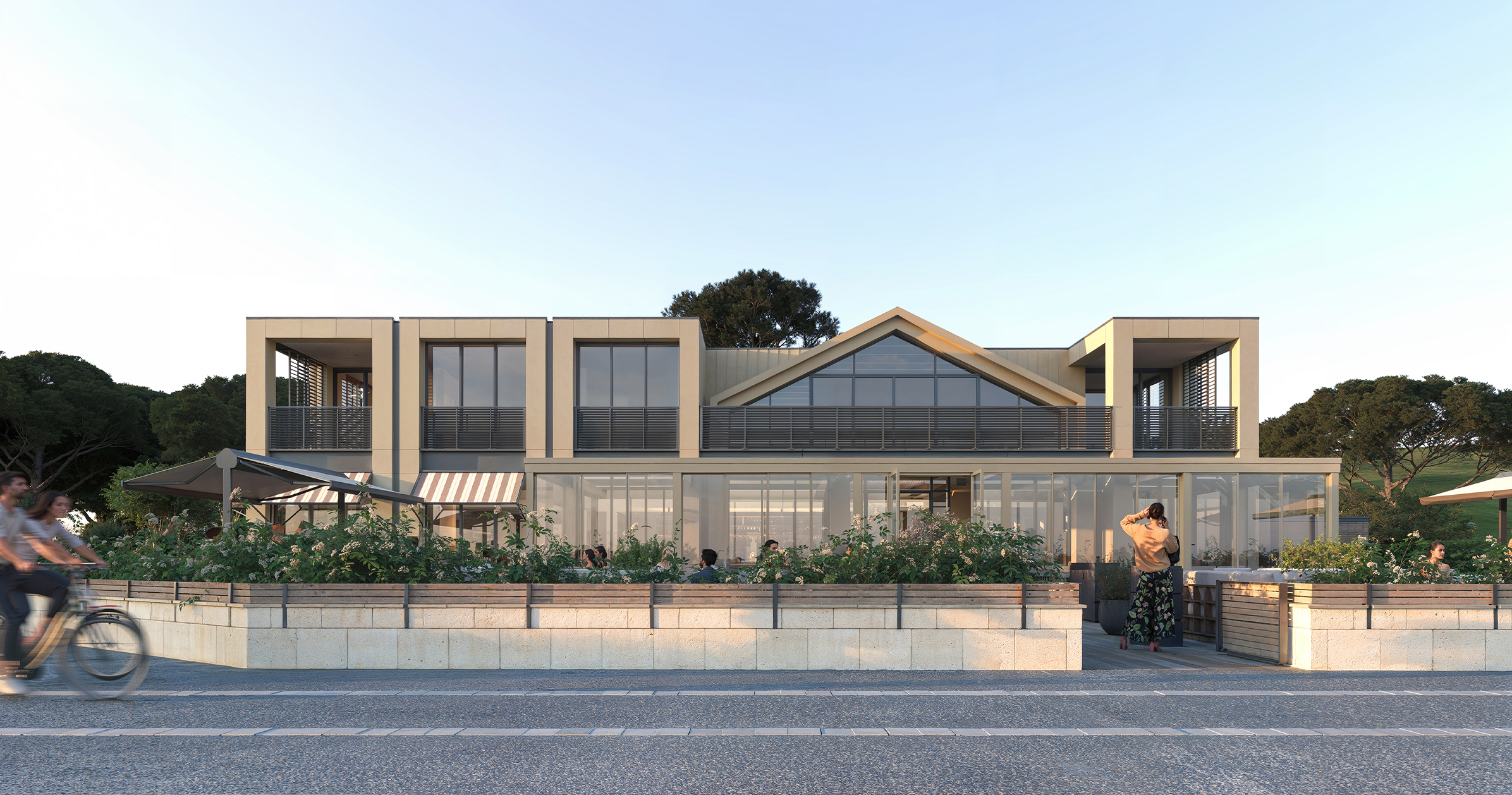
- The ground-level base is dedicated to retail and is envisioned as a highly transparent glazed space.
- The main body of the building.
- The break level marked by the horizontal split at a height of 21 m, creating a distinctive architectural signature.
- The attic level, conceived as a suspended element resting on this split, detached from the main mass and body of the building.
The central space is designed as a shared, multi-use area that encourages social interaction, enhanced by greenery and accessible terraces connected to the commercial spaces.

The project calls for reflection on the responsibility of building a new part of the city. It develops and asserts its own identity by prioritizing urban continuity, as well as architectural restraint and elegance, as its founding principles. We envisioned a very understated architecture, harmoniously integrated into its context.
Jean-Michel Wilmotte and Jean-Baptiste Miralles